 Are There Hot Springs
What is Mammoth Hot Springs?
Mammoth Hot Springs is a hydrothermal area in Yellowstone National Park, Wyoming, about 5 miles inside the North Entrance at Gardiner, Montana. Hot water dissolves limestone underground and deposits it at the surface as travertine, building white, orange and brown terraces that change constantly.
You see the springs from boardwalks and, in summer, from the one-mile Upper Terrace Drive; soaking is not allowed. It is Yellowstone's year-round area, reachable by car in every season, with a visitor center, a hotel, a campground and elk that live here all year.
Are there hot springs in Yellowstone?
Yes, more than 10,000 hydrothermal features, and hot springs are the most common kind. You can only look at them, though: it is illegal to swim or soak in any thermal feature in the park. To soak, head just north of the park to Yellowstone Hot Springs at Corwin Springs, Montana.
History of Mammoth Hot Springs
The US Army took charge of Yellowstone in 1886 and built Fort Yellowstone at Mammoth between 1891 and 1913. Soldiers handled arrests, wildlife protection, fires and medical care. The fort stands on an old terrace formation, and builders worried the hollow ground might not hold them; fenced sinkholes still mark the Parade Ground.
Today the red-roofed fort buildings house park offices, staff housing and Albright Visitor Center, and the area is a National Historic Landmark District with a self-guided trail.
Is Mammoth Hot Springs open today?
Yes. Yellowstone is open 24 hours a day, and the road from the North Entrance through Mammoth stays open to cars all winter. No closure was posted for Mammoth when we checked on .
- National Park ServiceNo closure posted for Mammoth. The road between the North and Northeast entrances is the only park road open to regular vehicles all winter.
- Upper Terrace DriveA summer-only side road. In winter you ski or snowshoe the Upper Terraces instead.
- Road worksSingle-lane traffic with delays of up to 15 minutes at the Gardner River High Bridge, between Mammoth and Tower, until 24 November 2026.
- WildfireNo active fire perimeters within about 15 miles.
- Weather warningsChecked live from the National Weather Service when the weather section loads.
Check the Yellowstone park conditions page, or call (307) 344-2117 for recorded road information.
Mammoth Hot Springs hours and entrance fees
Yellowstone is open 24 hours a day, 365 days a year, and the terraces are reachable by car in every season. Daylight is best for seeing the colours on the terraces. Services in Mammoth village keep their own seasons:
| Service | Season |
|---|---|
| Albright Visitor Center | Open all year; hours change through the year |
| Mammoth General Store | Open all year, except New Year's Day, Thanksgiving and Christmas |
| Mammoth Hotel and dining room | Open until early March 2027 |
| Terrace Grill | Closed for the season since 12 October |
| Mammoth Medical Clinic | Open all year, except some holidays |
Mammoth Hot Springs entrance fees
Mammoth is inside Yellowstone, so you pay the park entrance fee at the gate.
| Pass | Price |
|---|---|
| Private vehicle, 7 days | $35 |
| Motorcycle, 7 days | $30 |
| On foot, bike or skis, age 16+ | $20 per person |
| Yellowstone annual pass | $70 (US citizens and residents) |
| Nonresident fee, age 16+ | $100 per person, on top of the entrance fee; waived with an annual or America the Beautiful pass |
Is Mammoth Hot Springs free?
No. The terraces themselves are free to walk, but you pay the Yellowstone entrance fee to reach them.
Do you need a reservation for Mammoth Hot Springs?
No. You don't book to walk the terraces; you pay the entrance fee when you drive in.
Mammoth Hot Springs directions
Mammoth is about 5 miles inside Yellowstone's North Entrance at Gardiner, Montana, the only entrance open to cars all year.
- Drive to Gardiner, Montana, on US-89.
- Enter Yellowstone at the North Entrance, past the Roosevelt Arch, and pay the entrance fee.
- Follow the road about 5 miles south, climbing beside the Gardner River, to Mammoth.
- Park in the Mammoth area and walk up to the boardwalks on the terraces.
From Bozeman
About 85 miles: I-90 east to Livingston, then US-89 south through Paradise Valley to Gardiner. Allow about 1 hour 45 minutes.
Can you drive to Mammoth Hot Springs in winter?
Yes. The road from the North Entrance through Mammoth to Cooke City is the only park road open to regular vehicles all year; most others close from early November to late April. Side roads such as Upper Terrace Drive are summer only.
Mammoth Hot Springs map
The terraces rise above Mammoth village, beside the park road 5 miles south of the North Entrance. Boardwalks loop around the Lower Terraces from the parking areas.
© OpenStreetMap contributors
Mammoth Hot Springs, Yellowstone National Park, Park County, Wyoming
Mammoth Hot Springs weather
The forecast below is the National Weather Service forecast for the terraces, loaded when you reach this section.
Loading the forecast… If it doesn't appear, open the weather.gov forecast for Mammoth Hot Springs.
The terraces sit at about 6,700 feet. In winter the boardwalks and stairs can be icy, and the steam is at its most dramatic on cold mornings.
Mammoth Hot Springs weather by season
| Season | What to expect |
|---|---|
| Winter | Cold and snowy, with icy boardwalks. Only the road from the North Entrance to Cooke City stays open to cars. |
| Spring | Snow lingers into May. Elk calve around Mammoth in May and June, and cow elk can charge: stay at least 25 yards away. |
| Summer | Mild to warm days and cool nights, with afternoon thunderstorms. The busiest season, and Upper Terrace Drive is open. |
| Autumn | The elk rut runs from about September into October, with bulls bugling on the lawns. Snow is possible from September. |
How hot is Mammoth Hot Springs?
The water generally surfaces at about 170°F, after cooling slightly on its way from the Norris Geyser Basin. That is hot enough to cause severe burns.
- ~170°FWater at the surface vents
- 2 tonsCalcium carbonate carried to the surface each day, building the terraces
Can you swim in Mammoth Hot Springs?
No. Soaking in hot springs is prohibited in Yellowstone, both for your safety and to protect the fragile travertine. The nearby Boiling River swim spot is closed because of flood damage from 2022. For a legal soak, head 8 miles north of Gardiner to Yellowstone Hot Springs.
How do the terraces form?
Hot water dissolves limestone underground and deposits it at the surface as travertine. The terraces change constantly, sometimes within a day, and when a vent shifts a section can dry out, as Minerva Terrace did after minor earthquake activity.
Mammoth Hot Springs rules
The terraces are a protected thermal area, and the rules exist to protect both you and the travertine. It is illegal to swim or soak in Yellowstone's thermal features; you may only swim in water fed by their runoff, such as the Boiling River, which is closed. Rangers enforce these rules, and walking on the thermal ground can lead to a citation.
- No soaking, wading or touching the water.
- Stay on the boardwalks and marked trails: the ground around the springs is fragile and can hide scalding water.
- Give elk plenty of room: stay at least 25 yards away.
- No drones anywhere in the park.
Can you bring a dog to Mammoth Hot Springs?
Not onto the terraces. Pets are not allowed on boardwalks, trails or in thermal areas, even if carried. They must stay within 100 feet of roads, parking areas and campgrounds, on a leash no longer than 6 feet.
Is Mammoth Hot Springs good for kids?
Yes, with a hand to hold. The boardwalks and stairs are easy, but keep children on them at all times and well away from the elk.
What to bring to Mammoth Hot Springs
Leave the swimsuit behind: Mammoth is for walking, not soaking. Dress for boardwalks and stairs rather than water, and for weather that can turn cold in any month.
- Your park pass, or a card to pay the entrance fee.
- Layers: it can be cold at 6,700 feet in any month.
- Drinking water and sun protection in summer.
- Traction devices for your shoes in winter, when boardwalks ice over.
- Binoculars for watching elk from a safe distance.
Mistakes visitors make
- Packing a swimsuit and expecting to soak.
- Stepping off the boardwalk for a photo.
- Walking up to elk on the lawns.
- Planning winter routes on park roads that are closed to cars.
- Bringing the dog onto the terraces.
Food, gas and restrooms at Mammoth
Mammoth village, at the foot of the terraces, has restrooms, the Albright Visitor Center and a general store all year. There is a gas station, with fuel available in winter even when it isn't staffed, a post office open on weekdays and a medical clinic that is closed at weekends.
Mammoth Hot Springs safety tips
Boiling water, thin ground and wild elk are the real risks here. The National Park Service says hot springs have injured or killed more people in Yellowstone than any other natural feature, and more than 20 people have died from burns after entering or falling into them. These habits keep a visit safe.
- Stay on the boardwalks.Water surfaces at about 170°F, and the crust beside a spring can be thin. Keep children by the hand.
- Never touch the water.It can cause severe burns, and soaking is prohibited.
- Keep away from elk.Elk live around Mammoth all year and are wild and unpredictable; visitors are sometimes chased, trapped or injured. Stay at least 25 yards away.
- Watch for ice in winter.Boardwalks and stairs freeze. Traction devices help.
- Drink water and pace yourself.The terraces sit at about 6,700 feet, and the walk up the stairs is steeper than it looks.
- Check road status before winter trips.Only the northern road is open to cars, and conditions can change quickly.
Is Mammoth Hot Springs worth it?
Yes, to look at. The terraces, the historic fort and the elk make it one of Yellowstone's most rewarding stops, and the only major thermal area you can drive to all year. It is not a place to soak.
Why people love it
- Steaming, ever-changing travertine terraces
- Easy boardwalks and a summer scenic drive
- Fort Yellowstone's historic buildings
- Reachable by car in every season
What to know first
- No soaking or swimming
- Park entrance fee, plus a nonresident fee for overseas visitors
- Upper Terrace Drive is summer only
- Crowded around midday in summer
Best time to visit Mammoth Hot Springs
Summer opens every road, including Upper Terrace Drive. Winter brings the most steam and few crowds, with skiing and snowshoeing on the Upper Terraces, but the northern road is the only way in by car. In autumn, watch the elk from a distance.
Mammoth Hot Springs vs Yellowstone Hot Springs
| Mammoth Hot Springs | Yellowstone Hot Springs | |
|---|---|---|
| Where | Inside Yellowstone, 5 miles from Gardiner | Corwin Springs, 8 miles north of Gardiner |
| What you do | Look from boardwalks | Soak in pools |
| Water | About 170°F at the vents | Hot plunge about 104°F, cold plunge 60–65°F |
| Cost | Park entrance fee | Pool admission |
Where to stay near Mammoth Hot Springs
You can sleep beside the terraces at the park's hotel or campground, or stay in Gardiner, Montana, 5 miles north, where there are more hotels and services.
| Mammoth Hot Springs Hotel | Beside the terraces; open until early March 2027 |
|---|---|
| Hotel cabins | Cabins without hot tubs close for winter; the four hot tub cabins can be booked all year |
| Mammoth Campground | The park's only campground open all year. Reserved on Recreation.gov from roughly mid-April to mid-October, first come, first served the rest of the year. Flush toilets, no showers |
| Indian Creek Campground | Summer only |
Staying in Gardiner
Gardiner, Montana, just outside the North Entrance, has more hotels and rentals, plus the nearest showers, laundry and a wider choice of restaurants.
Mammoth hot springs in California: hot springs near Mammoth Lakes
Searching for Mammoth hot springs in California? You're after the free soaks near the town of Mammoth Lakes in the Eastern Sierra, a different place from Yellowstone's terraces. These are the best known.
-
95–105°F
Wild Willy's Hot Springs
Long Valley, about 13 miles from town. Free natural pools at the end of a ¼-mile boardwalk.
-
100–110°F
Hilltop Hot Springs
Benton Crossing Road. A free single tub you adjust with a valve.
-
View only
Hot Creek Geologic Site
Inyo National Forest, about 8 miles from town. A steaming gorge you can look at; swimming is prohibited.
-
Varies
Travertine Hot Springs
Bridgeport, north on US-395. Free pools on travertine, a short walk from a 1-mile dirt road.
Mammoth Hot Springs FAQ
Is Mammoth Hot Springs in Wyoming or Montana?
Wyoming. It is inside Yellowstone National Park, about 5 miles south of the North Entrance at Gardiner, Montana.
Can you see Mammoth Hot Springs from your car?
Partly. In summer the one-way Upper Terrace Drive loops past the Main Terraces and Orange Spring Mound. To see the Lower Terraces up close you walk the boardwalks.
Is Boiling River open?
No. Swimming at Boiling River is not possible because of flood damage from 2022.
Why do the terraces keep changing?
Because the springs keep building new travertine and their vents keep moving. Hot water dissolves limestone underground and deposits it at the surface as travertine. When a vent shifts, part of a terrace can dry out, as Minerva Terrace did after minor earthquake activity.
Where is the nearest place to soak?
Yellowstone Hot Springs in Corwin Springs, Montana, about 8 miles north of Gardiner, and Chico Hot Springs in Pray, about 30 miles from the North Entrance.
Is there lodging at Mammoth Hot Springs?
Yes. Mammoth Hot Springs Hotel and Cabins and the year-round Mammoth Campground are here, with more places to stay in Gardiner, Montana.
Mammoth Hot Springs pictures
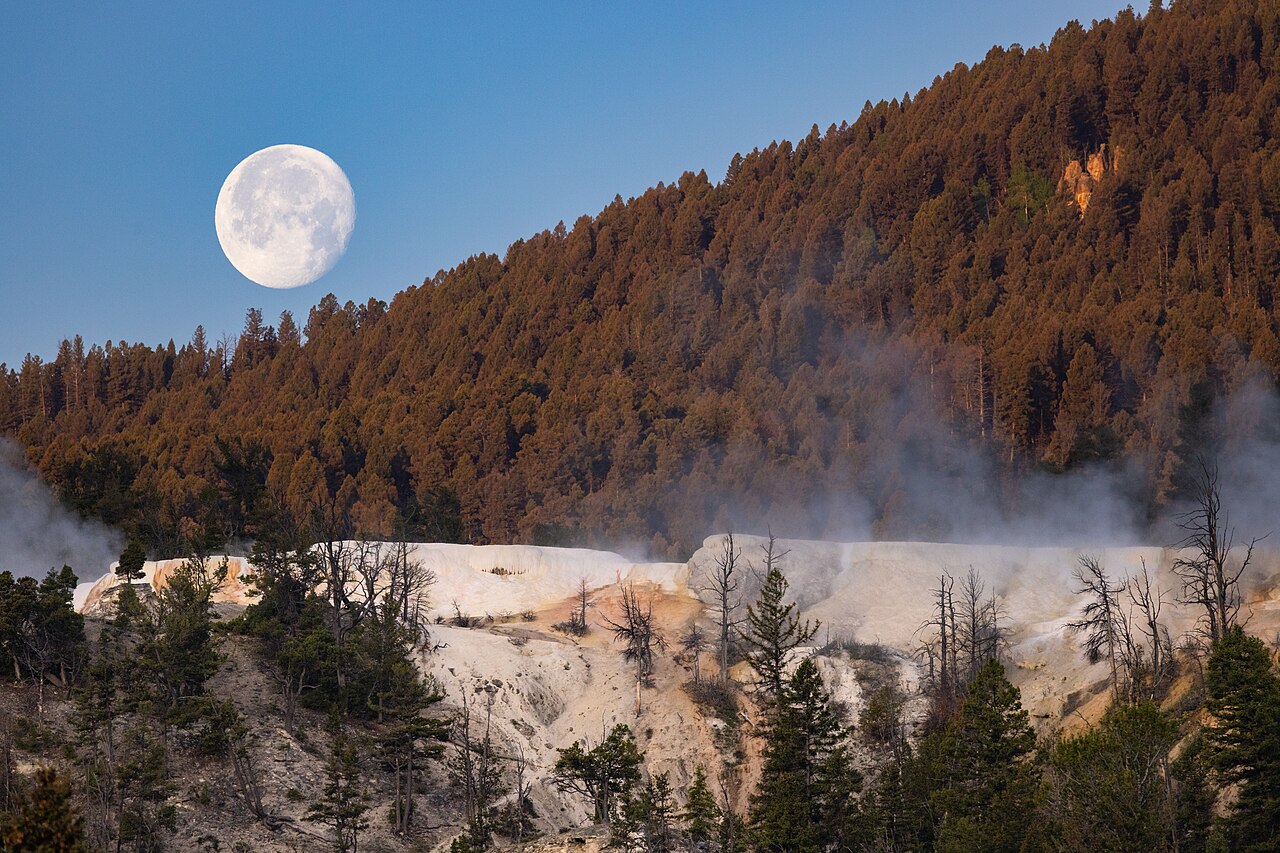
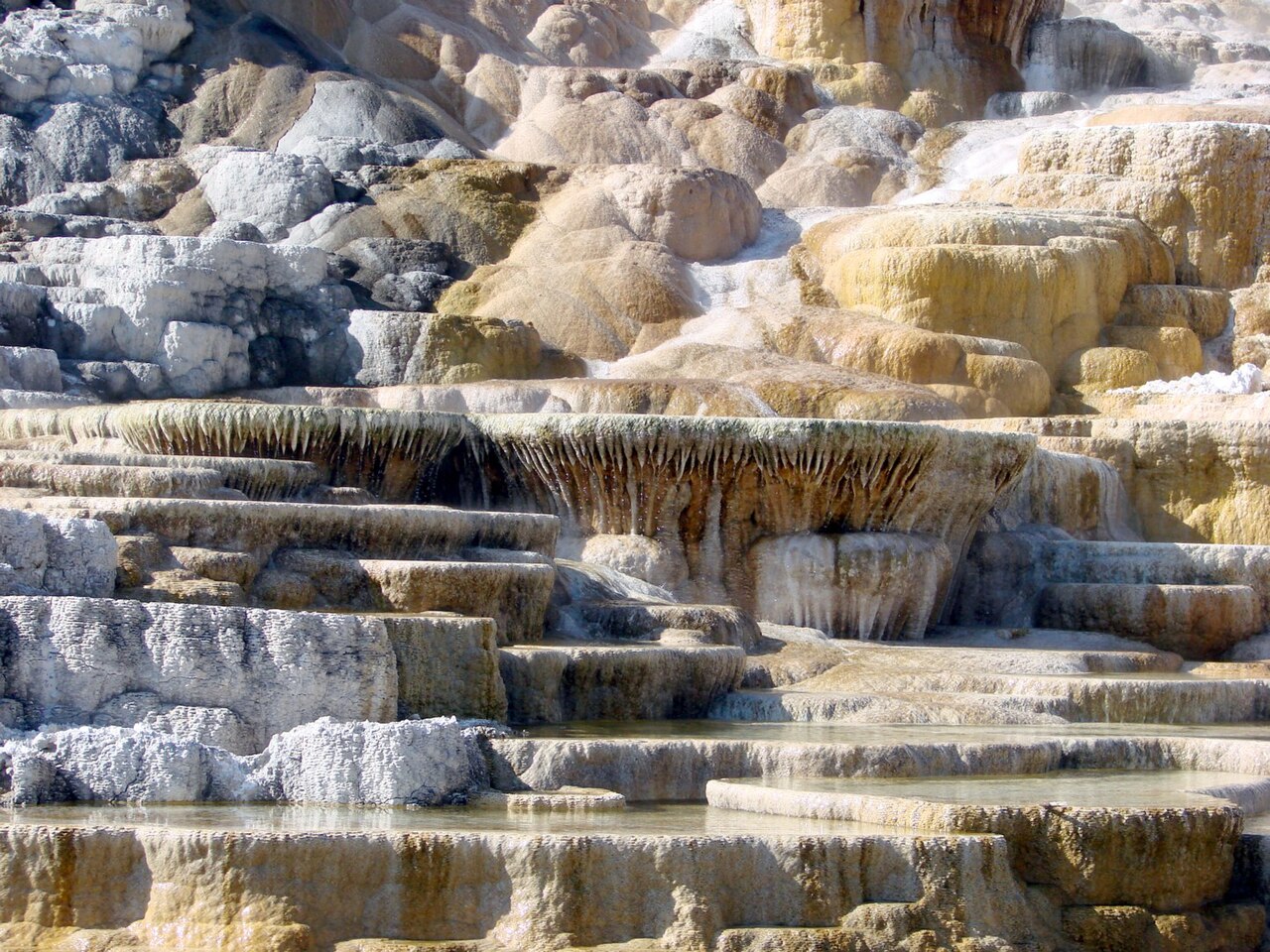
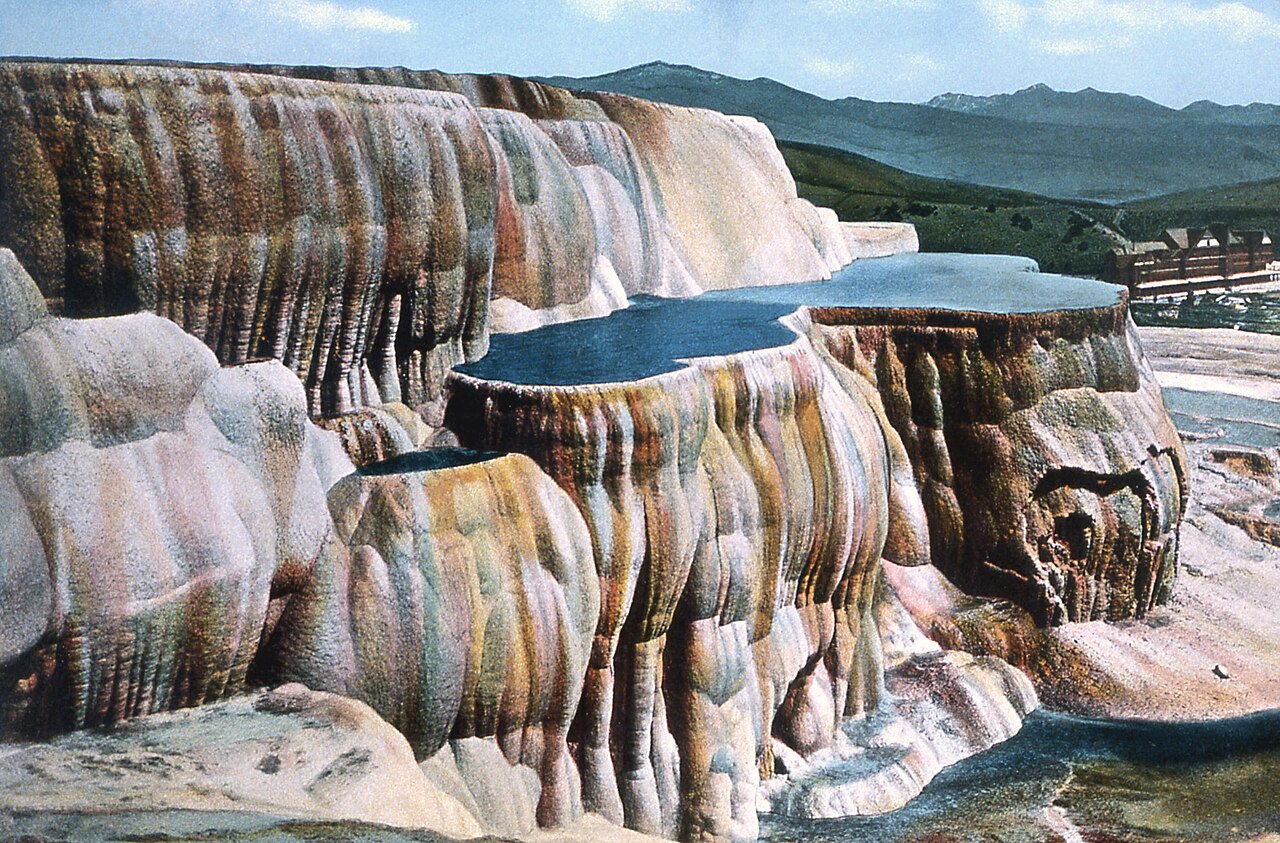
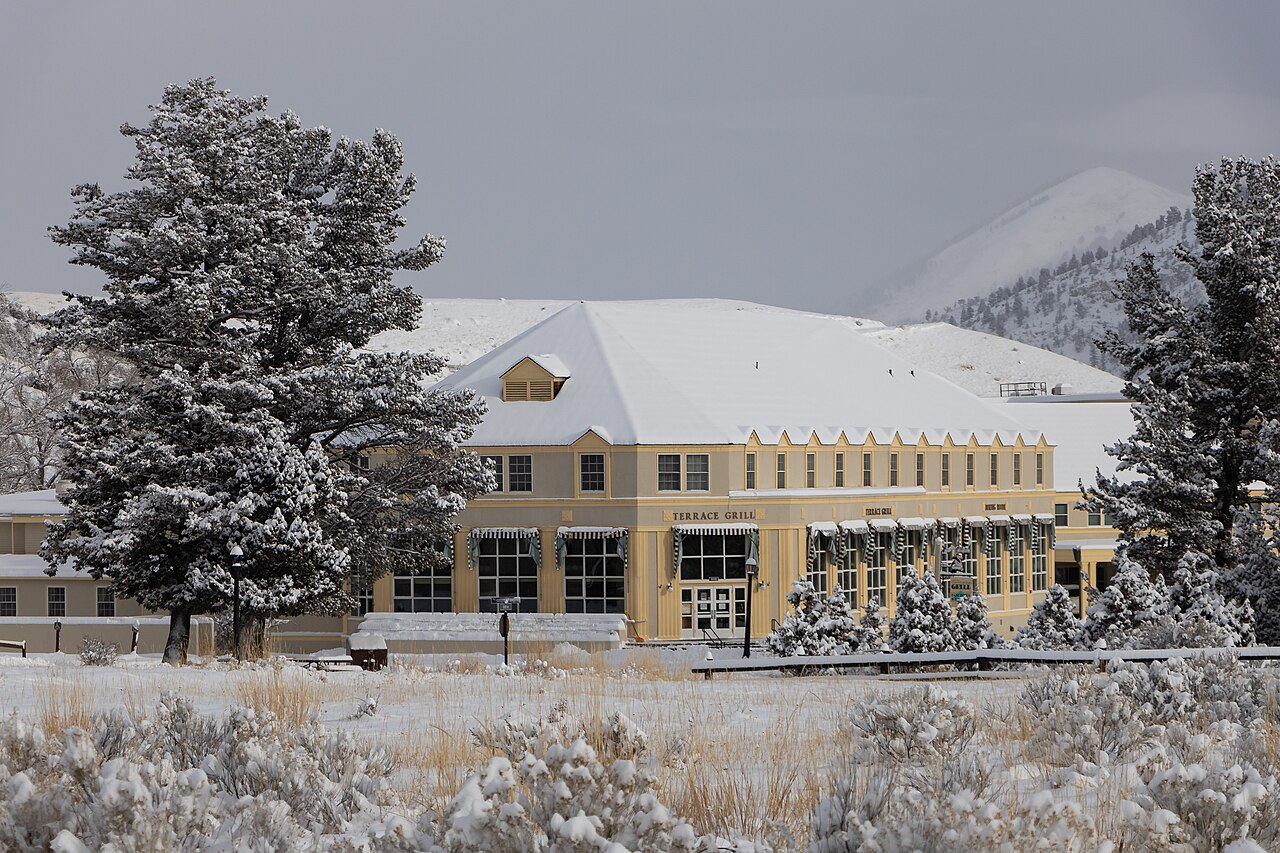
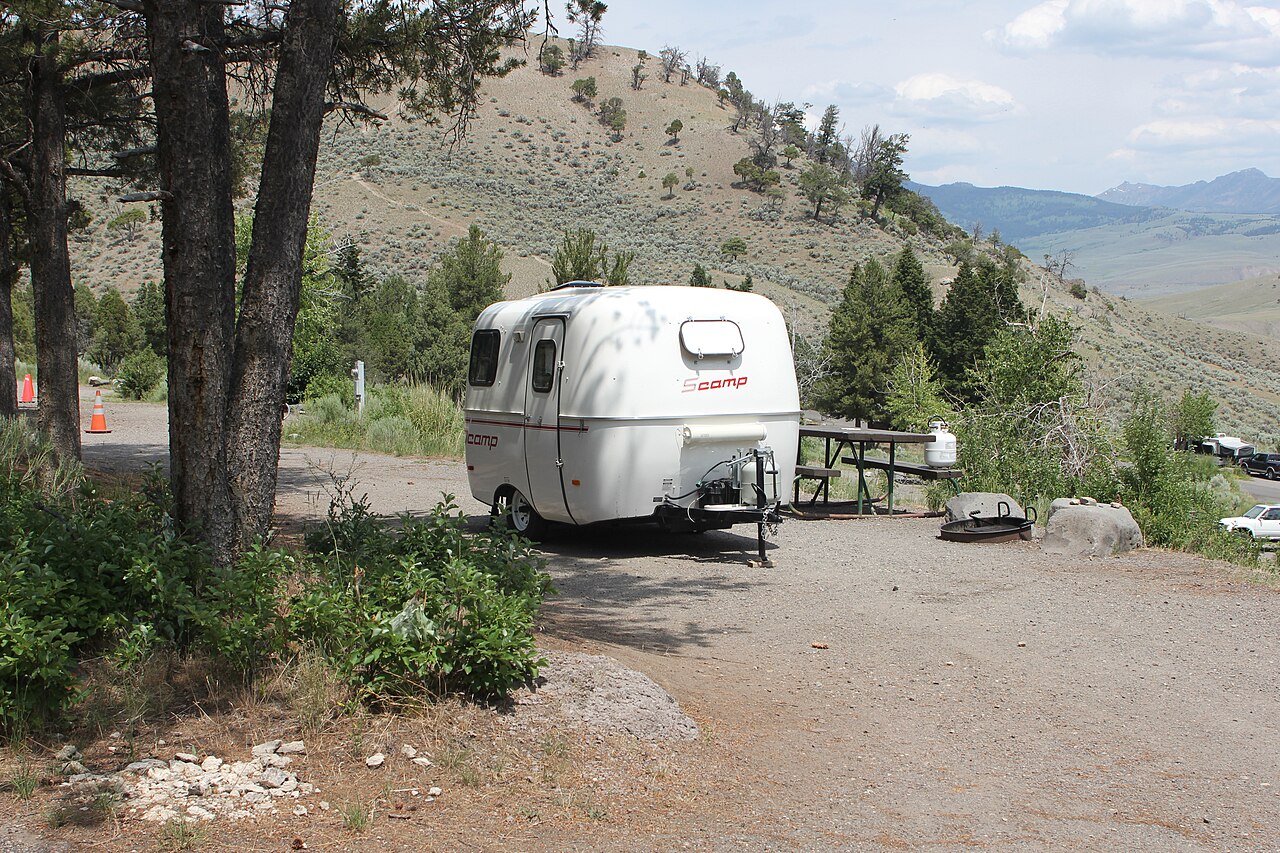
The terraces, Mammoth in winter and the area a century ago. Most of these photos come from the National Park Service and are in the public domain; every photo is credited under it.
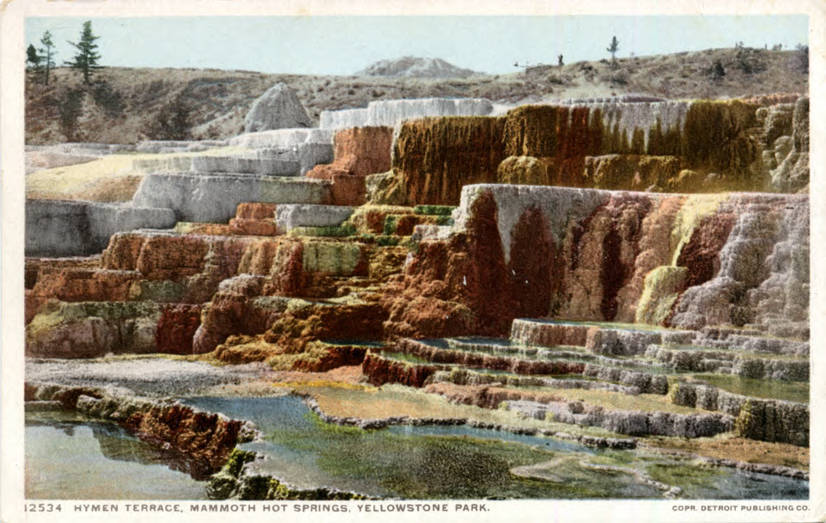
Compare the 1900s postcard of Hymen Terrace with the recent shots: springs at Mammoth switch on and off, so the white, active terraces move from year to year.
Hot springs near Mammoth Hot Springs
Are there hot springs in Gardiner, Montana?
Not in town. The nearest soak is Yellowstone Hot Springs at Corwin Springs, about 8 miles north of Gardiner on US-89. Chico Hot Springs, in Paradise Valley, is about 30 miles from the North Entrance.
Inside the park, the Boiling River swimming area is still closed, so these are your options.
-
98–104°F
Yellowstone Hot Springs
Corwin Springs, Montana, about 8 miles north of Gardiner on US-89. Pools by the Yellowstone River, with a hot and a cold plunge.
-
Varies
Chico Hot Springs
Pray, Montana, in Paradise Valley, about 30 miles from the North Entrance. Two geothermal pools at a resort on more than 700 acres.
-
Closed
Boiling River
Inside Yellowstone, near the North Entrance. No swimming: flood damage from 2022.
Sources and verification
- NPS: Yellowstone alerts (winter road closures, Gardner River High Bridge delays)
- NPS: park roads and operating hours (year-round road, Albright Visitor Center)
- NPS: Explore Mammoth (terraces, Upper Terrace Drive, Fort Yellowstone, elk, lodging)
- NPS: Accessibility around Mammoth Hot Springs (restrooms, store, gas station, clinic) and safety (thermal injuries)
- NPS: entrance fees, swimming and Boiling River and pets
- Chico Hot Springs, official site (nearby Montana listings)
- Wyoming State Parks and Bridger-Teton National Forest (Wyoming listings)
More hot springs in Wyoming
Are there hot springs in Wyoming?
Yes. Beyond Yellowstone's thermal areas, where soaking is not allowed, Wyoming has hot springs you can get into across the state, from Thermopolis in the Bighorn Basin to Saratoga and the mountains south of Jackson. Two of these three are free.
-
104°F
Hot Springs State Park
Thermopolis. A free State Bath House kept at 104°F, beside mineral terraces on the Big Horn River.
-
100–119°F
Saratoga Hobo Hot Springs
Saratoga. Free town pools by the North Platte River, open 24 hours a day.
-
93–112°F
Granite Hot Springs
Bridger-Teton National Forest, south of Jackson. A pool by Granite Creek; reached only by snowmobile, skis, fat bike or dog sled in winter.
More hot springs in the United States
Further afield, these are some of the best-known hot springs we list in the West, from free soaks at the end of a hike to stone pools you book ahead.
-
103–107°F
Strawberry Park Hot Springs
Steamboat Springs, Colorado. Stone soaking pools by a creek; reservations and cash only.
-
80–115°F
Remington Hot Springs
Kern River, California. Free volunteer-built tubs on the riverbank, a short, steep walk from the road.
-
113°F
Goldbug Hot Springs
Near Salmon, Idaho. Free natural pools at the end of a 2-mile hike with a steep finish.
-
110–112°F
Umpqua Hot Springs
Umpqua National Forest, Oregon. Travertine pools above the river, 0.3 miles up a steep trail; daylight only.
-
100–102°F
Fifth Water Hot Springs
Diamond Fork Canyon, Utah. Milky blue pools below a waterfall on a 4.5-mile round-trip hike.
-
Varies
Travertine Hot Springs
Bridgeport, California. Free natural pools a short walk from a 1-mile dirt road; temperatures differ a lot.